1967–1968 dorm years
Blind Willow, Sleeping WomanThe 1967–1968 dorm years refer to the narrator’s residence in a student dormitory from spring 1967 to fall 1968. Remembered against the backdrop of the student movement, the period brings together institutional rituals, youthful political and cultural enthusiasms, and personal experiences that would remain consequential beyond the dormitory itself. In retrospect, it forms part of what the narrator names the prehistory of late-stage capitalism: a time he recalls as unusually vivid, even as he recognizes how difficult it is to explain what made it seem special.
Historical and Generational Setting
The narrator places his student years within a personal timeline: born in 1949, he entered junior high school in 1961 and college in 1967. He describes reaching twenty amid the student movement, in a decade crowded with political upheaval and cultural influences, including Jim Morrison, the Beatles, Bob Dylan, rock music, films, and literature. He remembers his generation as caught up in a powerful sense of momentum and promise, but also in irritation, disillusionment, and the conviction that the moment mattered.
His later name for the era, “A Pre-History of Late-Stage Capitalism,” captures the distance between its apparent simplicity and the complexity that followed. He recalls a world in which cause and effect seemed direct and reality easier to grasp, while admitting that the exhilaration of the decade could fade without yielding a clear lesson. The dorm years therefore sit inside a retrospective account that both preserves the period’s intensity and questions what that intensity ultimately meant.
The Dormitory and Its Daily Order
The narrator called the dormitory home from spring 1967 to fall 1968. Its buildings and grounds offered extensive communal facilities, but its management was surrounded by uncertainty: it was run by a foundation whose stated educational aims sat alongside rumors of political influence and questionable financial arrangements. The narrator suggests that such speculation did little to alter everyday life there.
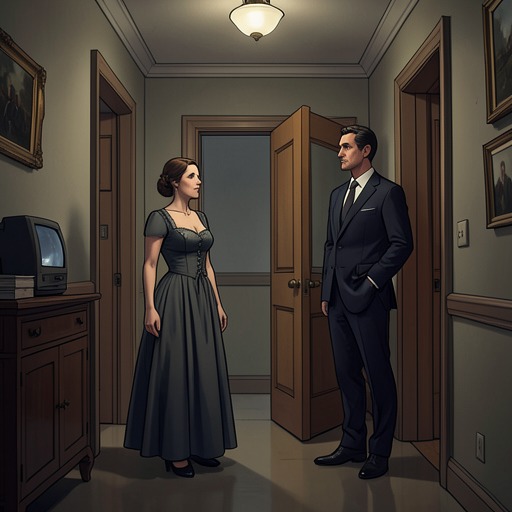
Each morning began with a formal flag-raising in the courtyard, accompanied by the national anthem. The ceremony was led by the head of the narrator’s dorm, a tough-looking man rumored to have attended the Nakano Military Academy, with an enigmatic uniformed student assisting him. This repeated display of discipline and national symbolism formed part of the dorm’s ordinary schedule, even as the students lived through an era associated with protest and political change.
Relationships, Youth, and Loss
The period’s wider generational portrait includes the narrator’s recollection of a couple he and his friends called, in effect, an idealized pair. They seemed inseparable, sharing school breaks, train journeys, and time spent waiting for one another. The narrator’s circle largely paid them little attention, absorbed instead in sex, rock and roll, films, political movements, and literature. Looking back, he recognizes that both groups were young and self-assured, and that their contrasting illusions did not make either group wiser about life.
A dead friend also marks the passage into adulthood. When the narrator’s girlfriend turned twenty, he brought a cake from Shinjuku on a rainy day; the crowded train reduced it to a crumbled ruin, but they put twenty candles on it, closed the curtains, and celebrated with wine. The birthday made their ages newly tangible: they had found it easier to imagine themselves moving between eighteen and nineteen, while their dead friend remained forever seventeen. In that contrast, an ordinary birthday becomes a measure of time that loss has stopped for one person but not for the living.
Memory Beyond the Dorm Years
The significance of the period extends beyond the dormitory. The narrator’s account connects the decade’s public history with private experience: wartime losses are remembered through family stories, while later recollections of bereavement and trauma show how the past can continue to govern a life. In one such account, a survivor haunted by K’s death leaves his seaside hometown for Nagano Prefecture, where he remains; years later, studying K’s watercolor leads him to decide that he must return to his old home. These memories are not events of the dorm years themselves, but they echo the book’s broader interest in how decisive experiences persist and are revisited.
The dorm period is thus both a dated stage in the narrator’s life and a frame for his reflections on generational memory. Its ceremonies, youthful pursuits, and awareness of death sit beside the narrator’s later effort to understand what the 1960s promised and what remained after its excitement passed. Rather than reducing the era to a settled lesson, his recollection preserves the tension between a feeling that history was unusually immediate and the uncertainty of knowing what that feeling amounted to.